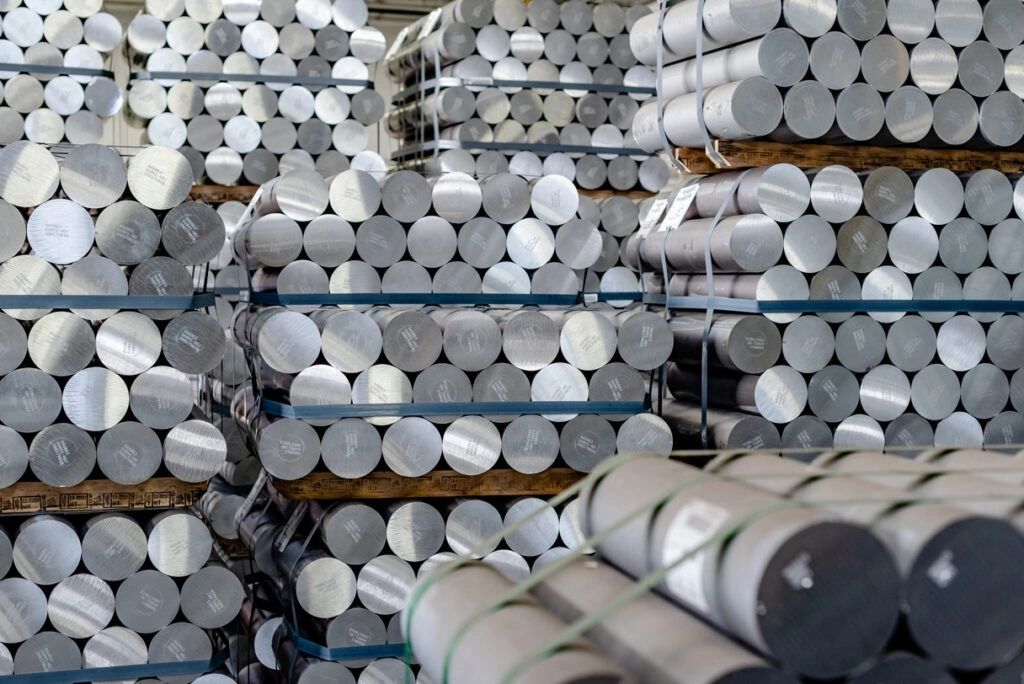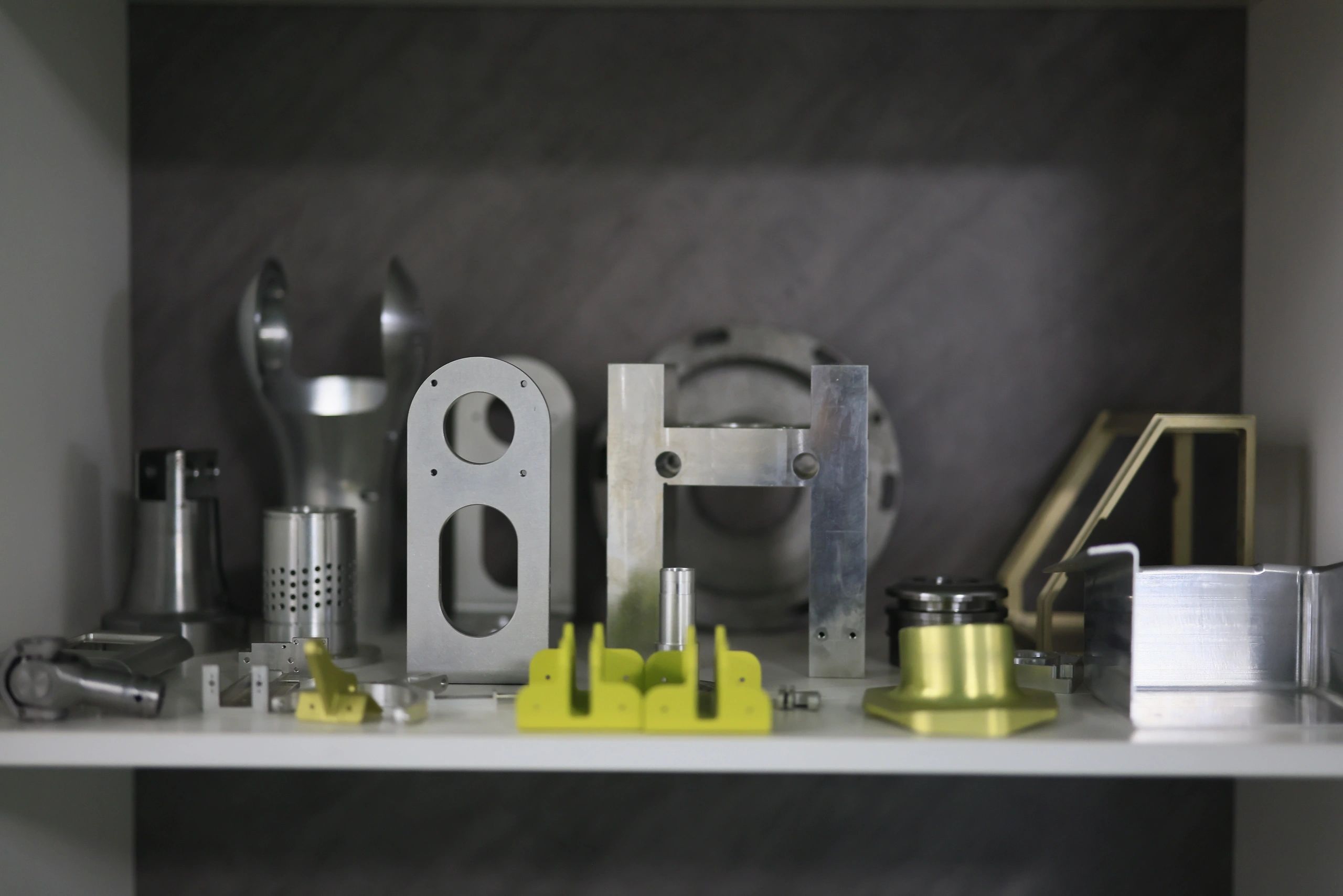
This page provides an overview of commonly used CNC materials and helps you understand their key characteristics, cost level, and typical applications.
Material Cost ($) – Relative raw material cost based on part size (not price per kg).
$$$$$ High material cost
$$$$
$$$
$$
$ Low material cost
Machining Cost ($) – Relative machining effort/cost based on material machinability.
$$$$$ High machining cost
$$$$
$$$
$$
$ Low machining cost
Production Turnaround (★) – Typical overall production speed, considering material availability and machining complexity.
★★★★★ Short lead time
★★★★☆
★★★☆☆ Standard lead time
★★☆☆☆
★☆☆☆☆ Long lead time

Common Grades: 6061, 6082
Material Cost: $$
Machining Cost: $$
Production Turnaround: ★★★★★
Material Overview:
This grade is one of the most common alloys of aluminium. It is very widly used in many industries as well as for general purpose usage. It offers good weldability, good corrosion resistance, workability and machinablity. It is one of the most common grades for milling and turning, but its mechanical properties makes it ideal for many others applications.

Common Grades: 7075, 7050
Material Cost: $$$
Machining Cost: $$$
Production Turnaround: ★★★★★
Material Overview:
This grade of aluminum is also know as aircraft or aerospace aluminum due its most common application. Its high strength makes is stand out from the other aluminium alloys and be comparable to the strength of many steels. Even though it has convinent combination of properties for many applications, 7 series aluminium compared to other aluminium alloys has lower corrosion resistance, but very good machinability

Common Grades: 5083, 5052
Material Cost: $$
Machining Cost: $$$$
Production Turnaround: ★★★★☆
Material Overview:
5 series aluminium alloy is a good choice for extreme environments due to its resistivity to salty water, chemicals, attacks. It has relatively high strength and good corrosion resistance. This alloy stands out because it is not hardenable by heat treatment. Due to its high strength it has limited complexity of shapes that can be machined, but it has excellent weldability.

Common Grades: 304, 316, 17-4 PH
Material Cost: $$$$
Machining Cost: $$$$
Production Turnaround: ★★★☆☆
Material Overview:
Stainless steel is widely used for applications requiring strength, durability, and corrosion resistance. It offers good mechanical properties and maintains performance in harsh or moisture-prone environments. While more difficult to machine than aluminum or carbon steel, its reliability and long service life make it a preferred choice for many industrial and precision components.

Common Grades: Q235, Q355, C45
Material Cost: $
Machining Cost: $$$
Production Turnaround: ★★★★☆
Material Overview:
Mild and carbon steels are widely used for general industrial and mechanical applications due to their strength, durability, and cost efficiency. They offer good machinability and weldability, making them suitable for a wide range of structural and load-bearing components. These materials are commonly selected when reliable mechanical performance is required at a competitive cost.
*Part in picture shown above is zinc plated

Common Grades: 4140, 42CrMo4
Material Cost: $$
Machining Cost: $$$
Production Turnaround: ★★★★☆
Material Overview:
Alloy steels provide higher strength, toughness, and fatigue resistance than standard carbon steels. They offer good hardenability and can be heat treated to achieve improved mechanical performance for demanding applications. While machining is more demanding than mild steel, these materials are commonly used for components that require high strength, durability, and long service life.

Common Grades: Ti-6Al-4V, TA2
Material Cost: $$$$$
Machining Cost: $$$$$
Production Turnaround: ★★★☆☆
Material Overview:
Titanium offers an excellent strength-to-weight ratio, outstanding corrosion resistance, and good performance in harsh or high-temperature environments. It is significantly stronger and lighter than many steels, making it ideal for weight-sensitive and high-performance applications. Due to its low thermal conductivity and high strength, machining is more demanding and requires careful process control.

Common Grades: C36000, C38500, C27000
Material Cost: $$$$$
Machining Cost: $$
Production Turnaround: ★★★☆☆
Material Overview:
Brass offers excellent machinability, good corrosion resistance, and reliable dimensional stability. It produces smooth surface finishes and allows for high machining efficiency, making it ideal for precision components. Brass is also widely used in applications requiring good electrical conductivity, low friction, or an attractive appearance.

Common Grades: C11000, C14500
Material Cost: $$$$$
Machining Cost: $$$$
Production Turnaround: ★★☆☆☆
Material Overview:
Copper provides excellent electrical and thermal conductivity along with good corrosion resistance. It is widely used in applications where efficient heat transfer or electrical performance is critical. Due to its softness and high ductility, machining requires careful handling to maintain dimensional accuracy and surface quality.
All materials are sourced from approved suppliers and fully traceable by batch and heat number. Material certificates and documentation are available upon request.

Common Grades: Delrin, Acetal, POM-C
Material Cost: $$
Machining Cost: $
Production Turnaround: ★★★★☆
Material Overview:
POM (Acetal) is an engineering plastic with high strength, excellent dimensional stability, and low friction. It offers very good machinability, allowing for fast processing, tight tolerances, and smooth surface finishes. Its wear resistance, low moisture absorption, and stable performance make it ideal for precision components and moving parts.

Common Grades: PA6, Glass filled PA6, Oil filled PA6
Material Cost: $
Machining Cost: $$ - $$$ (depending on tolerance due to limited dimensional stability)
Production Turnaround: ★★★★☆
Material Overview:
Nylon is a tough and wear-resistant engineering plastic with good strength and impact resistance. It offers good machinability and is suitable for producing durable components with low friction characteristics. Its ability to absorb shock and operate under repeated mechanical stress makes it well suited for moving and load-bearing plastic parts.

Common Grades: PEEK
Material Cost: $$$
Machining Cost: $$$
Production Turnaround: ★★★★☆
Material Overview:
PEEK is a high-performance engineering plastic that offers excellent strength, wear resistance, and dimensional stability, even at elevated temperatures. It provides outstanding chemical resistance and maintains mechanical performance in harsh environments. While machinable, its high material cost and processing requirements make it best suited for demanding, high-value applications.

Common Grades: PTFE (Teflon)
Material Cost: $
Machining Cost: $$ - $$$$ (depending on tolerance due to poor dimensional stability)
Production Turnaround: ★★★☆☆
Material Overview:
PTFE is a high-performance plastic known for its extremely low friction, excellent chemical resistance, and wide operating temperature range. It performs well in harsh environments and applications requiring non-stick or self-lubricating properties. Due to its softness and flexibility, machining requires careful handling to maintain dimensional accuracy.
CNC milling is used to machine complex shapes, flat surfaces, pockets, and detailed features from solid material. It is ideal for prismatic parts, housings, brackets, and components requiring tight tolerances.
Learn more about our CNC Milling Services

CNC turning is best suited for cylindrical parts and rotational components such as shafts, pins, bushings, and threaded parts. It offers high efficiency and excellent dimensional consistency for round components.
Learn more about our CNC Turning Services