Extrusion and CNC machining make parts in completely different ways, and for many aluminium parts the cheapest, most accurate route is to use both. Here's how each works, what each can hold, where the cost crossover sits, and when to extrude the profile then machine only the features that need precision.
How each one works
Extrusion pushes a heated aluminium billet through a shaped die to produce a continuous profile with a constant cross-section, think of squeezing toothpaste, then cuts it to length. The die is a one-time cost, after which each metre is cheap.
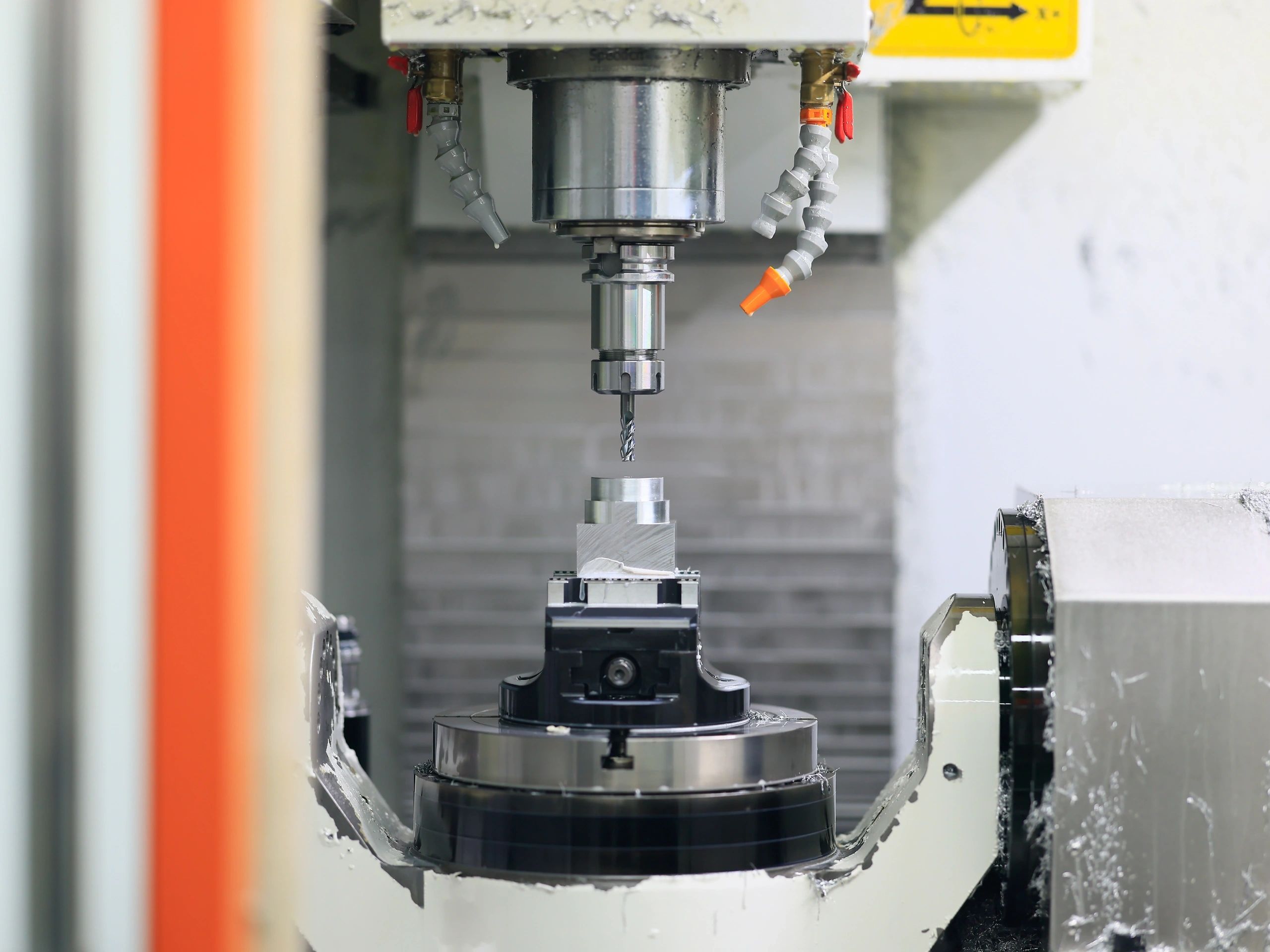
CNC machining removes material from solid stock with cutting tools to produce almost any three-dimensional shape, holes, pockets, threads and tight-tolerance faces, with no part-specific tooling.
Side by side
| Extrusion | CNC machining | |
|---|---|---|
| Geometry | Constant cross-section only | Full 3-D: holes, threads, pockets |
| Tolerance | ~±0.1–0.5 mm | ISO 2768-m, to ±0.005 mm |
| Up-front tooling | Profile die (one-time) | None part-specific |
| Best volume | High (amortise the die) | 1 to mid-volume |
| Lead time | Die takes weeks | Parts in days |
| Material cost | Low per metre | Higher (cut from solid) |
The hybrid: extrude, then machine
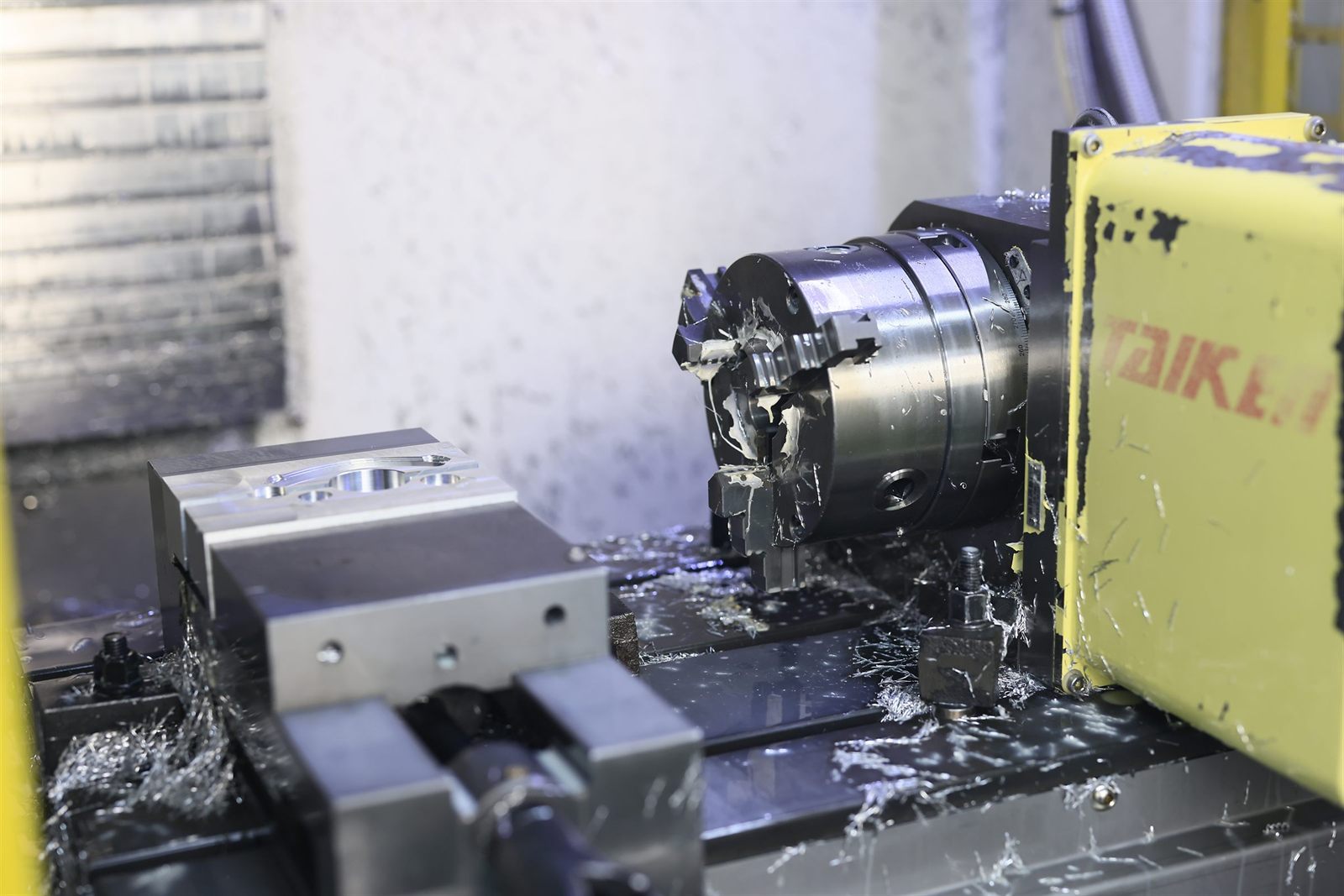
The two play to each other's strengths. Extrude the bulk profile cheaply, then CNC only the features that need precision, the end faces, mounting holes, threads, counterbores and slots. You get extrusion's low material cost and machined accuracy where it counts.
It's the standard route for parts like heatsinks (extrude the fins, machine the mounting interface), enclosure bodies (extrude the tube, machine the end faces and ports) and rails and frames (extrude the section, machine the holes).
Which route, in one line
- Constant cross-section, high volume, loose tolerance → extrude
- Complex 3-D, tight tolerance, or low volume → machine from solid
- A constant section that also needs precise faces or holes → extrude, then machine (hybrid)
Send the model and your expected volume, and we'll tell you which route is cheapest, including whether an existing standard profile already fits.