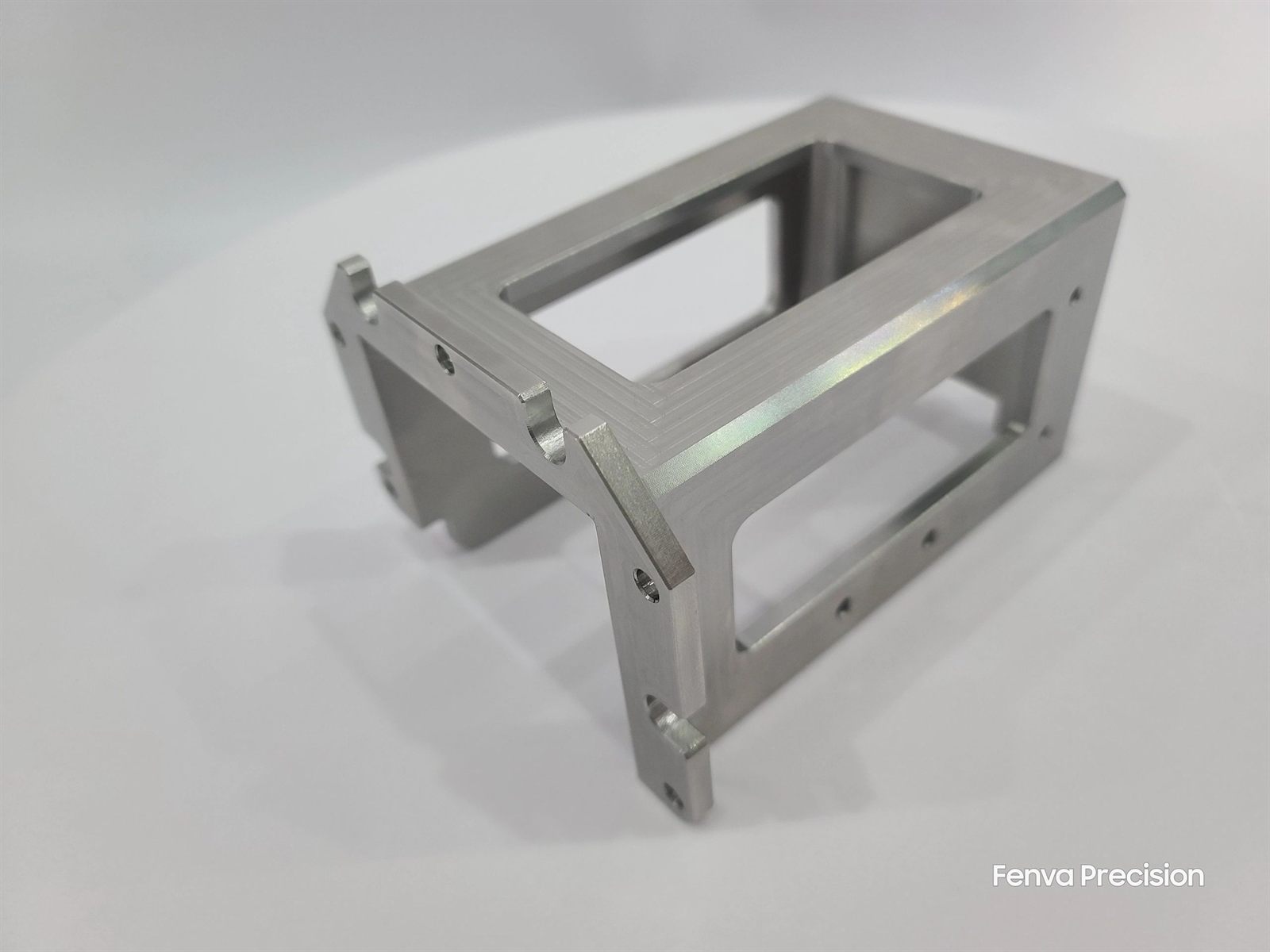
Polished aluminium with a reflective, low-Ra mirror surface

公差指南

Ra 表面粗糙度详解:怎么理解、怎么标注

"Ra" appears on most drawings, yet it is often misunderstood. This article explains what it means, what is realistic in CNC machining, how it differs from Rz, and how to call it out so that smoothness is paid for only where it is required.

What Ra is. Ra is the average roughness of a surface, measured in micrometres (µm) as the mean deviation of the surface profile from its centre line. Lower means smoother. It describes texture and is entirely separate from dimensional tolerance: a part can be exactly on size yet feel rough, or feel smooth yet be out of tolerance.

The Ra ladder, what's realistic, and what it's for

Achievable Ra by process, confirmed per face at DFM review. Cost is relative.
Ra (µm)Ra (µin)Typical processLooks / good forCost
6.3250Roughing, bead blastCoarse matte; non-critical faces$
3.2125Standard millingVisible tool lines; general surfaces$
1.663Finish milling / turningDefault machined finish; most faces$
0.832Fine turning / finishing passSliding fits, static seals, gaskets$$
0.416Grinding / light polishFine & dynamic seals$$$
0.28Grinding / polish / EDM skimBearing journals, near-optical$$$
≤0.1≤4Lapping / mirror polishMirror, optical, sealing-critical$$$$
Rougher Smoother as-machined 6.3 3.2 1.6 0.8 0.4 0.2 ≤0.1 Ra (µm), each step down multiplies the finishing time

Why smoother costs more

Down to about Ra 1.6, the finish carries no added cost — it is simply how the part comes off the machine. Ra 0.8 typically requires one additional finishing pass, a modest cost. Below Ra 0.8, the cost reflects grinding, polishing or hand-work, and each step down multiplies the time. A mirror finish at Ra 0.1 can cost more than the machining itself.

Ra vs Rz: a key distinction

Ra is an average over the whole profile. Rz is the average peak-to-valley height, so for the same surface it reads roughly 4–7× higher. That means "Rz 6.3" describes a far smoother surface than "Ra 6.3." If your drawing uses Rz, please label it clearly so it is not read as Ra.

From our floor: turned surfaces come off finer than milled ones because the tool stays in continuous contact, so a turned Ra 1.6 is straightforward while a milled Ra 0.8 demands considerable effort. Where a feature can be turned, a finer finish is often achievable at lower cost. A fine Ra is also a per-face request: smoothing one sealing face is inexpensive, smoothing the entire part is not.
Coatings do not fix Ra: plating and anodizing mirror the surface beneath them. A part at Ra 1.6 remains Ra 1.6 after nickel — tool marks included. For a face that must be both smooth and coated, we polish or brush it before coating.

How to call it out on your drawing

SURFACE: Ra 0.8 µm MAX ON FACE A  (symbol per ISO 21920-1, formerly ISO 1302)
ALL OTHER SURFACES: Ra 3.2 µm  (general note)

Call out the fine Ra only on the faces that require it and leave the rest as-machined. This keeps the part cost-effective and indicates precisely where the finishing effort should be directed.

Three common mistakes

  • A blanket fine Ra across the whole part — this incurs finishing cost that is not needed.
  • Confusing Ra and Rz — Rz reads 4–7× higher for the same surface.
  • Expecting plating or anodizing to smooth a rough surface — it only mirrors what's underneath.
Send your drawing, quote in 48 hours See the Finish Library

Ra 是图纸上最常见的表面粗糙度参数,但许多采购人员对其理解存在偏差。本文将详解 Ra 的定义、CNC 加工的实际能力范围、Ra 与 Rz 的区别,以及如何正确标注,确保仅为关键部位的表面质量付费。

Ra 是什么。Ra 指表面轮廓偏离中线的算术平均偏差,单位为微米(µm),数值越低表示表面越光滑。它属于表面纹理规范,与尺寸公差完全独立:零件可以尺寸精准但表面粗糙,也可以表面光洁但尺寸超差。

Ra 阶梯:能做到多少、用在哪

各工艺通常可达 Ra,具体数值在 DFM 时逐面确认。成本为相对值。
Ra (µm)Ra (µin)常用工艺外观 / 适用成本
6.3250粗加工、喷砂粗亚光;非关键面$
3.2125普通铣削可见刀纹;一般面$
1.663精铣 / 车削默认本色加工;多数面$
0.832精车 / 精加工滑动配合、静密封$$
0.416磨削 / 轻抛精密、动密封$$$
0.28磨削 / 抛光 / 电火花精修轴承位、近光学$$$
≤0.1≤4研磨 / 镜面抛光镜面、光学、密封关键$$$$

为什么表面越光洁,成本越高

Ra 1.6 及更粗的等级通常属于“机加工自然状态”,无需额外成本;达到 Ra 0.8 通常只需增加一道精加工工序,成本增幅有限;低于 Ra 0.8 则需进行磨削、抛光或手工处理,每降低一个等级,工时成本呈倍数增长。实现镜面效果(如 Ra 0.1)的成本甚至可能超过机械加工本身。

Ra 与 Rz 的区别

Ra 代表平均值;而Rz表示平均峰谷高度。对于同一表面,Rz 的读数通常比 Ra 高出 4–7 倍。因此,标注“Rz 6.3”的表面远比“Ra 6.3”光滑。若图纸使用 Rz 参数,请务必清晰标注,以免误读。

车间经验:由于刀具持续接触,车削面通常比铣削面更细腻。在相同要求下,车削达到 Ra 1.6 较为轻松,而铣削达到 Ra 0.8 则需投入更多工序。若特征可通过车削加工,往往能以更低成本获得更细的表面。此外,精细 Ra 按面计:仅处理一个密封面成本较低,全件抛光则成本显著上升。
涂层不改变 Ra:电镀和阳极氧化会复制底层表面 —— Ra 1.6 的零件镀后仍为 Ra 1.6,刀纹同样保留。若需表面既光洁又带涂层,应先抛光或拉丝,再进行电镀。

怎么标注

表面:A 面 Ra 0.8 µm MAX  (符号按 ISO 21920-1,原 ISO 1302)
其余表面:Ra 3.2 µm  (通用注)

仅在关键功能面标注严格的 Ra 要求,其余表面保持机加工原始状态。这既能控制零件成本,又能明确指示我们需要重点处理的区域。

三个常见误区

  • 全件统一标注精细 Ra——导致为不必要的表面处理支付高昂费用。
  • 混淆 Ra 与 Rz——同一表面下,Rz 数值约为 Ra 的 4 至 7 倍。
  • 指望电镀或阳极氧化掩盖粗糙表面——涂层会如实反映基体表面的微观形态。
发送图纸,48 小时内报价 查看表面处理图库
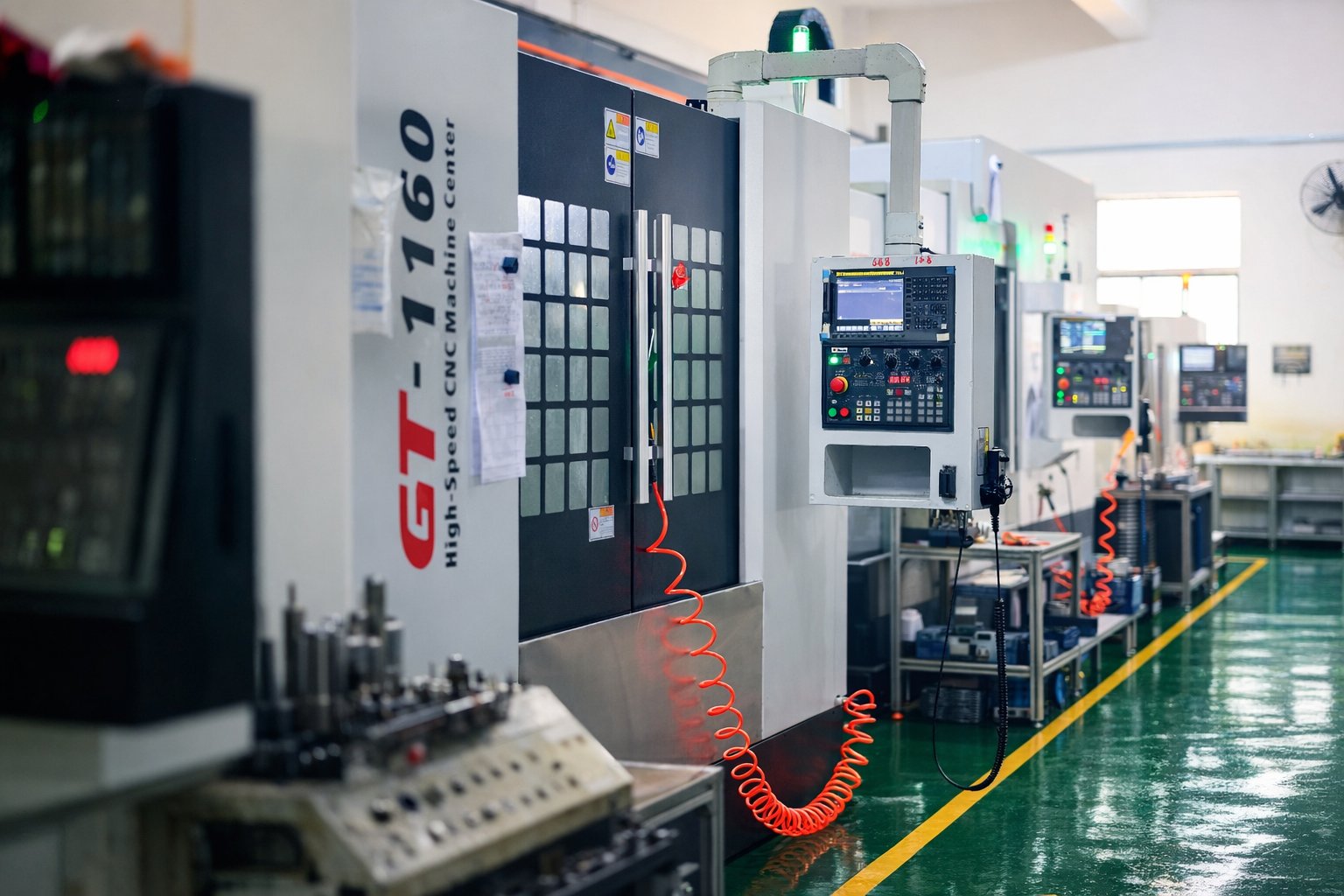
High-speed CNC machining centres along the production aisle at Fenva Precision

把光洁度花在刀刃上

按面确认可达 Ra。

标出关键面并发送图纸,我们确认可达 Ra 值,48 小时内报价。